

The Anxious Generation, Part Two: What Happens When We Take Away Childhood
What Children Actually Need to Do in Childhood
Play is the work of childhood. That line has been attributed to both Jean Piaget and Maria Montessori, and honestly, it holds up. The problem is that somewhere along the way, we stopped believing it — and our kids are paying the price.
Let me give you an example that I keep coming back to: Legos.
Legos are genuinely one of the best toys ever invented. But look at what they've become. Walk into any toy store and the shelves are lined with specialty build kits — every piece pre-selected, step-by-step instructions included, one correct outcome. You build the Millennium Falcon, you feel proud for about 20 minutes, and then it sits on a shelf because the thing is basically too fragile to actually play with. That's not a toy. That's a project.
The original point of Legos was the opposite — dump out a bin of random bricks and figure it out. Spatial thinking, creative problem solving, trial and error, frustration tolerance. Real skills, built through real play. Now we've optimized all of that out of the experience in favor of a cleaner, more controlled outcome. Sound familiar?
This is exactly what Jonathan Haidt is talking about in The Anxious Generation. Free play — the kind that is freely chosen, child-directed, and pursued for its own sake — has been systematically replaced. Not just by screens, but by over-structured, adult-managed activities that don't leave room for kids to actually struggle, fail, negotiate, or lead themselves. And the research is clear: physical, outdoor, somewhat risky play with other kids is the kind that actually builds something. It teaches children to look after themselves and each other. It builds the emotional muscle that no app can replicate.
Haidt makes an important point about social learning that I think gets overlooked. There's a window — roughly ages 9 to 15 — that appears to be a sensitive period for cultural learning and identity formation. What kids absorb during these years tends to stick in a way that earlier or later learning simply doesn't. These are the puberty years, the years when the brain is rewiring at a pace second only to infancy. And these are also, not coincidentally, the years when most kids in the developed world get their first smartphone and migrate their social lives online. We are letting algorithms shape the most neurologically impressionable years of our children's lives. That should alarm all of us.
Discover Mode, Defend Mode, and Why Your Kid Needs to Climb the Tree
Here's a framework from the book that I found myself thinking about long after I put it down.
Haidt describes two operating modes of the human brain: Discover Mode, in which we approach the world with curiosity and appetite for new experience, and Defend Mode, in which we're on alert for threats. Both are necessary. The problem is that kids born after 1995 are increasingly stuck in Defend Mode — permanently scanning for danger rather than leaning into the world with confidence and hunger. In other words: anxious.
The antidote is not protection. It's exposure.
All children are, by nature, antifragile. The immune system needs germs. Trees need wind. Kids need setbacks, failures, and the occasional scraped knee — not because struggle is good for its own sake, but because navigating low-stakes difficulty is exactly how children build the self-reliance they'll need for high-stakes adulthood. When we over-protect, we don't keep kids safe. We make them fragile.
And here's something important that the research shows: kids are actually pretty good at self-regulating risk. Left to their own devices — literally, without devices — children naturally seek out the level of challenge and thrill they are ready for. They don't throw themselves off cliffs. They climb a little higher than last time, test the edge, pull back, and try again. That process is how fear gets metabolized. It's how competence gets built. Risk-taking online, by contrast, doesn't appear to have the same effect. You can't develop genuine confidence from a screen.
So why have modern parents — many of whom will fondly remember unsupervised bike rides, creek exploration, and running around the neighborhood until dark — pulled the plug on all of that for their own kids? The most commonly cited reasons are fear of kidnapping, predators, or traffic accidents. But the data doesn't support the fear. Violence against children, drunk driving fatalities, crime rates — these have all dropped steeply since the 1990s. The world is not more dangerous. It feels more dangerous because we are more surveilled, more connected to bad news, and more conditioned to see risk everywhere. Haidt calls this Safetyism — the elevation of physical safety to a near-sacred value — and he makes a compelling case that it is itself a form of harm. When we block every risk, we block growth.
Puberty, Rites of Passage, and a Generation That Never Gets to Cross the Threshold
I want to be direct about something here, because I think it bears saying plainly: smartphones — specifically, children's unsupervised access to social media, internet video, and pornography — are not a neutral presence in a child's life. The data Haidt presents points toward something stronger than correlation. There is a causational relationship between early, unguarded smartphone access and the rise of anxiety, depression, and suicide in the generation that grew up with them. This is not a parenting opinion. It is a public health crisis.
Part of what makes this so damaging has to do with timing.
I remember wanting desperately to go to sleep-away camp, the way my three older siblings had before me. Two weeks in the Adirondacks. No parents, no familiar food, not a single person I knew. The boat dropped me off with my trunk on the dock and that was that. The camp had a name that sounded vaguely like a Native American tribe, and we were sorted into cabins by age. For my family, camp was a rite of passage — and my siblings and I were eager, not reluctant. You went away. You got a little lost. You came back different, and better. I got my first pocket knife that summer.
That kind of experience — leaving home, navigating something hard without your parents, coming back with new skills and new standing — is what anthropologists call a rite of passage. Rites of Passage matter enormously. Van Gennep identified three phases common to rites of passage across cultures: separation, transformation, and reincorporation. You leave. You change. You return as someone new. These experiences mark a shift in status. They confer rights and responsibilities. And critically, they are not conducted by one's parents.
What strikes me now is that for many young people today, the first genuine rite of passage they encounter is leaving for college at 18. That's a long time to wait. When I mention sleep-away camp to my own kids — ages 7 and 10 — they nearly recoil. The idea of being away from home for two weeks feels unthinkable to them. That reaction tells me something.
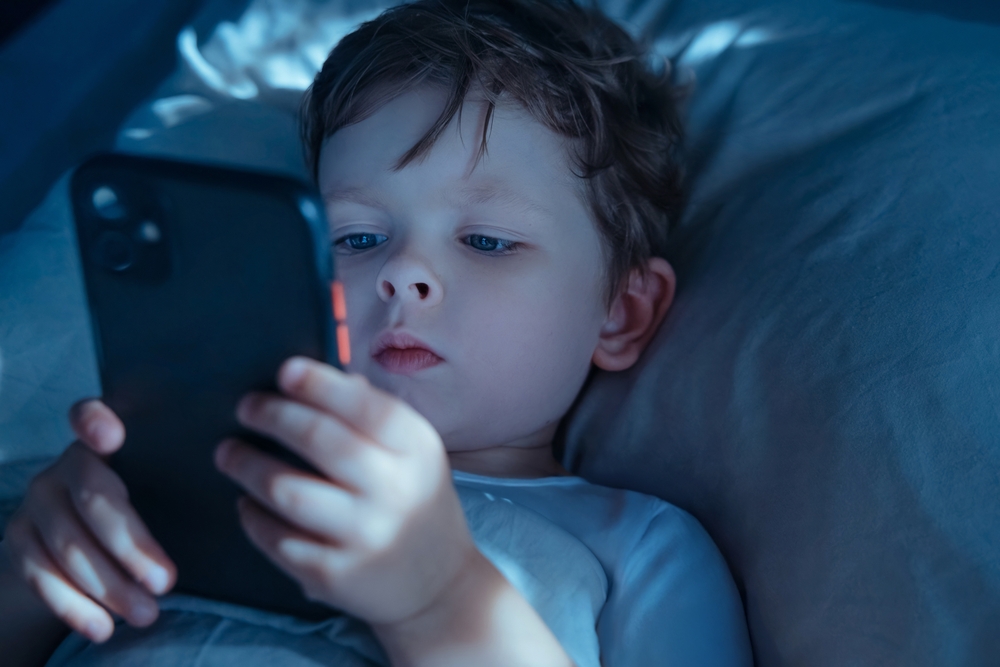
Smartphones have disrupted this natural progression in a very specific way. When you hand a child a device that delivers YouTube, video games, and social media on demand, you have handed them a very effective escape from every uncomfortable, character-building experience that might otherwise have called to them. Pitching a tent for the first time is hard and frustrating and a little humbling. YouTube is not. Given the choice, without guidance, kids will take the path of least resistance — and the algorithm will be right there to reward them for it.
What Rites of Passage shaped you? It's worth asking, because those experiences didn't just happen to you — they made you. The question is whether we're building a world where our kids get the same chance.
Early puberty is when the brain is most experience-hungry and most malleable. Neural pruning and myelination are happening at a furious rate, shaped directly by the experiences adolescents are having. We should be deeply intentional about what those experiences are — and deeply uncomfortable with the idea of strangers and algorithms making those choices for us.
The path forward isn't complicated, even if it's not easy. Kids need more freedom, more risk, more boredom, and more real-world challenge. They need fewer curated Lego kits and more piles of bricks. They need to be dropped off at the dock sometimes and trusted to figure it out.
They are more capable than we are giving them credit for. And our anxiety about their safety may, in fact, be the very thing standing between them and the childhood they need.
Waypoint Psychological Services works with children, adolescents, and the parents who are trying to raise them well. If this resonates with something you're navigating at home, we'd welcome the conversation. Reach out to schedule a consultation.

Call Or Text

Office
71 Franklin Turnpike Suite 2-8
Waldwick, NJ 07463
Get Directions »
Questions?
Send Email
© 2026 Waypoint Psychological Services. All rights Reserved. Accessibility Statement - Privacy Policy - Sitemap
Powered by:
